
Blog
Premier League 2026/27: How Football Clubs Are Turning Fan Engagement Into Business Growth
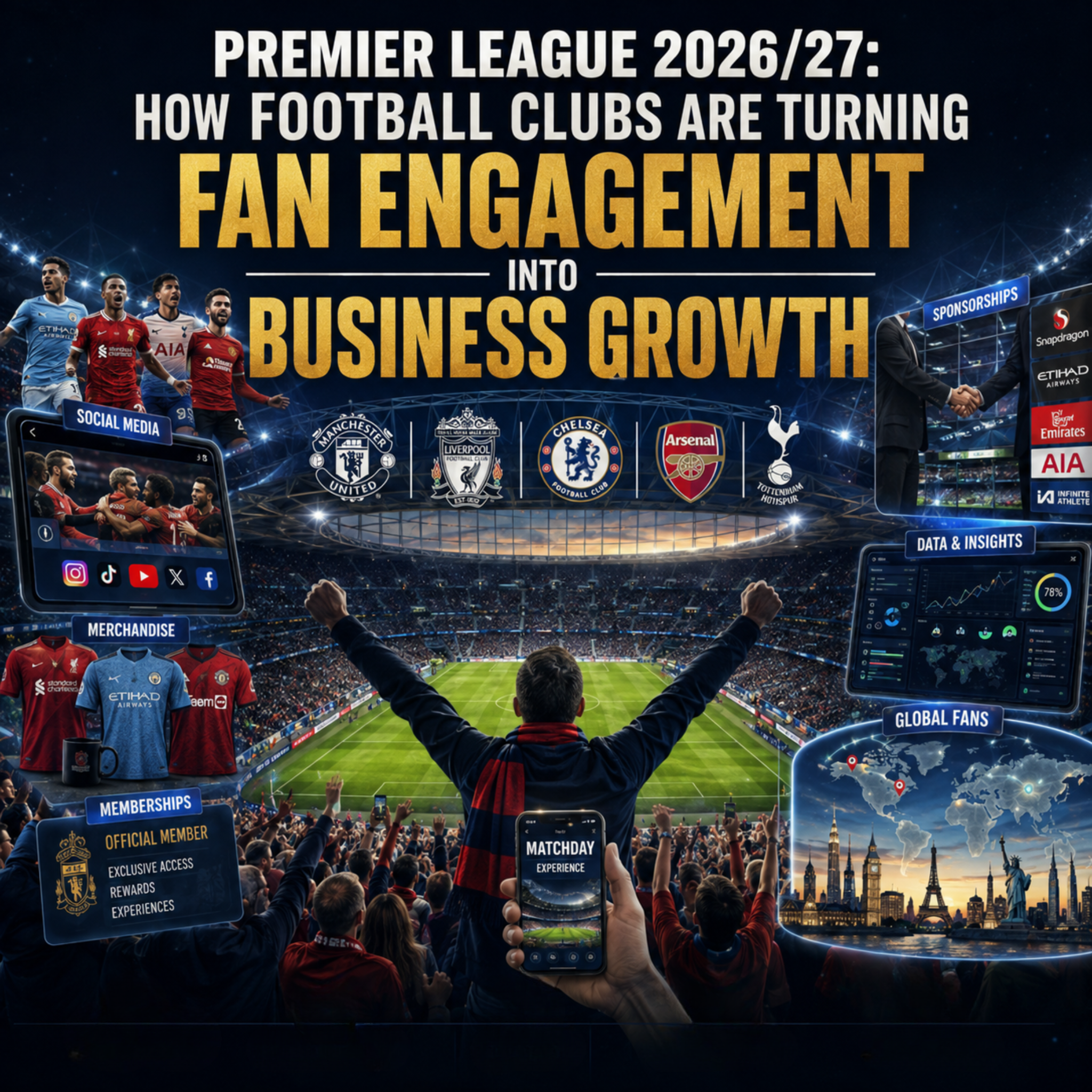
The Premier League is no longer just a competition played across 38 matchweeks. For football clubs, every fixture, player interaction and social media post can contribute to a much larger commercial picture.
The 2026/27 season is arriving at a time when football clubs are paying closer attention to how supporters interact with them away from the stadium. A fan might watch a match on television, follow a club on Instagram, buy a shirt online, watch a player's interview on YouTube and later interact with one of the club's sponsors. All of these actions form part of the modern football business.
That shift has made fan engagement a serious commercial priority.
Clubs that understand their supporters and give them reasons to remain connected can create opportunities across sponsorship, merchandise, hospitality, digital content and international partnerships.
What Has Changed About Football Fans?
A supporter today has far more ways to interact with a club than previous generations did.
The relationship no longer begins when the stadium gates open and ends when the final whistle goes. It can continue throughout the week and across multiple digital platforms.
A typical supporter may:
- • Follow club and player accounts on social media
- • Watch training and behind-the-scenes content.
- • Purchase merchandise through an online store
- • Subscribe to club memberships
- • Attend matches or hospitality events
- • Take part in online campaigns
- • Share club content with other fans
- • Interact with commercial partners
For football organisations, this constant connection has real value. It provides more opportunities to understand what supporters care about and where a club can build stronger commercial relationships.
The challenge is making those interactions feel worthwhile rather than turning every fan touchpoint into an advertisement.
Fan Engagement Has Become Part of the Business Strategy
A strong fan base has always been important to football. What has changed is the number of ways clubs can build value around that audience.
Consider a simple example. A club launches a new home shirt. Traditionally, the focus would have been on the product itself and its availability in club stores.
Today, the launch could involve players wearing the shirt, short-form videos, supporter reactions, social media storytelling, online campaigns and sponsor integrations. The same launch can generate conversations across several channels before supporters even walk into a stadium.
That is where effective fan engagement becomes commercially useful.
It can support:
- • Merchandise sales
- • Membership growth
- • Sponsorship activation
- • Hospitality bookings
- • Digital subscriptions
- • Brand awareness
- • International audience development
The objective isn't simply to collect followers. It is to build an audience that wants to stay connected with the club.
Social Media Is Changing Football Marketing
Football clubs have an advantage that many other businesses would like to have: supporters already care deeply about the brand.
A goal, a transfer, a young player's breakthrough or even a training-ground moment can generate enormous interest within minutes.
Social media allows clubs to build on that interest every day.
Instead of relying exclusively on traditional sports media, clubs can speak directly to their supporters. A training video can be published in the morning, a player interview in the afternoon and matchday content later in the day.
But volume alone does not create loyalty.
Fans can quickly lose interest when every post feels like a sales message. Successful football marketing therefore tends to mix commercial content with stories, personality and genuine moments from inside the club.
Player-led content is particularly valuable because supporters often develop strong connections with individual athletes. When handled properly, those personalities can strengthen both the club's identity and its commercial appeal.
Sponsorship Is Becoming More About the Audience
The sponsorship market is changing alongside fan behaviour.
For many years, football sponsorship was strongly associated with logo placement on shirts, advertising boards and other physical assets. Those elements remain important, but brands increasingly want to know what they can do with the relationship beyond traditional visibility.
Recent reporting on the Premier League's 2026/27 sponsorship landscape points to a growing presence of technology, fintech and other business sectors as the market moves away from its previous dependence on gambling-related shirt sponsorship.
That change reflects a wider shift in what sponsors expect from sports partnerships.
A brand may now look for:
- • Access to a specific audience
- • Social media exposure
- • Original content opportunities
- • Digital campaigns
- • Hospitality experiences
- • Player involvement
- • International reach
- • Community initiatives
A football club with an active and loyal fan base can offer much more than advertising space. It can offer access to a community.
That distinction is becoming increasingly important.
Engagement Matters More Than Follower Counts
A club having millions of followers can look impressive, but the number alone tells only part of the story.
What matters is what those followers actually do.
Do they watch the content? Do they comment and share it? Do they purchase products? Do they attend events? Do they respond to campaigns? Do they interact with sponsors?
These behaviours provide a much clearer picture of audience value.
For this reason, sports organisations are paying greater attention to engagement rates, audience behaviour and conversion rather than treating follower growth as the only measure of success.
A smaller but highly engaged audience can sometimes be more commercially useful than a much larger audience that rarely interacts.
Personalisation Can Strengthen Supporter Relationships
Premier League clubs have supporters with very different interests.
One person may follow transfer news closely. Another may mainly watch player interviews. Someone else may be interested in merchandise, hospitality or youth development.
Treating all supporters in exactly the same way can lead to irrelevant communication.
Digital platforms and audience data make it possible to create more targeted experiences.
For example, clubs can use audience insights to understand:
- • Which types of content receive the strongest response
- • Which products attract particular audiences
- • Which markets show growing interest
- • How supporters interact with campaigns
- • Which channels produce the best results
The goal is not to bombard fans with personalised messages. Good personalisation should make communication more relevant and useful.
How Clubs Can Turn Engagement Into Revenue
There are several ways an engaged supporter base can contribute to commercial growth.
Merchandise
New kits, training wear and limited-edition products can be promoted through player content, social campaigns and digital launches.
Memberships
Clubs can offer supporters additional benefits such as exclusive content, priority access, competitions and special experiences.
Sponsorship
A strong digital audience gives sponsors additional opportunities to communicate with consumers through content and campaigns.
Hospitality
Corporate hospitality and premium matchday experiences can be promoted to businesses and high-value supporters through targeted marketing.
International Markets
Digital communication allows clubs to build relationships with supporters who may live thousands of kilometres away from the stadium.
For clubs with an international following, these audiences can become important for future commercial partnerships.
International Fans Are Opening New Markets
The Premier League's global appeal creates opportunities well beyond England.
A club can build a supporter community in the Middle East, Asia, North America or other international markets without needing a permanent physical presence there.
The UAE is particularly interesting from this perspective. The country has developed a strong sports and business ecosystem and continues to attract international sporting activity, investment and commercial partnerships.
For football organisations, the UAE can provide opportunities to connect with:
- • Regional brands
- • Investors
- • Corporate audiences
- • Sports organisations
- • International fans
- • Hospitality partners
This is where sports management becomes important. Entering a new market successfully requires more than putting a club logo in front of an audience. It requires an understanding of local business culture, partnerships, audience interests and long-term commercial objectives.
Data Is Making Fan Engagement More Strategic
Behind many successful digital campaigns is a growing amount of audience data.
Clubs can examine website activity, social engagement, merchandise purchases, ticket behaviour and campaign performance to understand how supporters interact with the organisation.
Used responsibly, these insights can help decision-makers answer practical questions.
Which campaign worked?
Which audience responded?
Which market is growing?
Which type of content deserves more investment?
Which partnership is generating meaningful engagement?
This is one reason digital transformation is becoming increasingly important in sports management. Technology does not replace the human side of football. It gives clubs better information with which to make decisions.
AI Will Add Another Layer to Fan Engagement
Artificial intelligence is also beginning to influence the way sports organisations work with their audiences.
AI can assist with content analysis, audience segmentation, recommendation systems, customer support and other digital functions. It can also help sports organisations process large amounts of information more efficiently.
For football clubs, the potential applications extend beyond marketing.
AI and data-driven systems can contribute to:
- • Player performance analysis
- • Scouting
- • Talent identification
- • Fan behaviour analysis
- • Content recommendations
- • Customer service
- • Commercial decision-making
The important point is that technology should support a clear sports or business strategy. Adding technology simply because it is available does not guarantee better results.
What the 2026/27 Season Can Teach Sports Organisations
The current Premier League environment highlights several lessons that apply well beyond English football.
Build relationships, not just reach
A large audience has value, but genuine supporter loyalty creates a stronger foundation for long-term growth.
Give sponsors something meaningful
A successful partnership should create opportunities for interaction rather than relying entirely on logo exposure.
Make content part of the wider strategy
Content should have a reason to exist. It can strengthen the club brand, support a campaign, promote a product or bring supporters closer to players and the organisation.
Think internationally
Digital channels allow clubs to build relationships in markets far outside their home country.
Use data to make better decisions
Audience insights can help organisations understand where their time and resources are producing the strongest results.
Where Sports Management Fits In
Turning fan interest into sustainable commercial value requires coordination across several areas.
Branding shapes how a club or athlete is perceived. Marketing and PR help communicate that identity. Sponsorship creates commercial partnerships. Talent management supports athletes and their professional development. Investment and consultation can help organisations assess opportunities and plan for long-term growth.
SHM UAE works across these areas through services covering Branding, Talent, Investments, Consultations, Athletes Health Care, Marketing & PR and Sports Sponsorship. Its approach brings different parts of the sports ecosystem together rather than treating each activity as an isolated function.
That integrated approach can be particularly valuable when athletes, clubs, brands and investors are looking to create partnerships that work beyond a single campaign or season.
The Business Value of a Connected Fan Base
Football will always be decided on the pitch, but the business surrounding the game is becoming increasingly sophisticated.
The Premier League's 2026/27 season provides a useful example. Clubs are competing not only for points but also for attention, loyalty, commercial partnerships and international relevance.
Fan engagement sits at the centre of that equation.
A supporter who watches a match can become a social media follower. That follower can become a member, customer or event attendee. The same supporter may later interact with a club sponsor or recommend the brand to others.
None of these outcomes is guaranteed. They depend on the quality of the relationship a club builds with its audience.
For modern football organisations, that is the real opportunity: turning attention into trust, trust into loyalty and loyalty into sustainable commercial value.
Frequently Asked Questions
Fan engagement helps football clubs maintain stronger relationships with supporters throughout the season. Consistent engagement can also support merchandise sales, memberships, sponsorships, hospitality and digital business opportunities.
Clubs can generate revenue through merchandise, memberships, ticketing, hospitality, sponsorship activation, digital products and international commercial partnerships. The right approach depends on the club's audience and overall business strategy.
Social media gives clubs a direct communication channel with supporters. It allows them to share content, promote products, support sponsors, build player brands and maintain fan interest between matches.
Data can help clubs understand supporter behaviour, content preferences, campaign performance and commercial activity. These insights can support better marketing decisions and more relevant fan experiences.
Sports management brings areas such as branding, marketing, sponsorship, talent development, investment and strategic consulting together. A coordinated approach can help sports organisations build stronger brands, develop partnerships and create sustainable commercial opportunities.